About the laboratory
Introduction
The Nannoworks Laboratory is primarily focused on the utilization of microfossils (coccolithophores, foraminifera, dinoflagellates and diatoms) or the biologic components of sediments to understand past (and present) geologic and oceanographic environments and processes. With this objective, the laboratory trains undergraduate and graduate students to do research in the application of these fossils and present their results in local and international conferences, and publish articles in journals.
Research works in the last several years have focused on the use of these microfossils as biostratigraphic tools in refining the Philippine biostratigraphy (Leyte, Tanay, Baguio, Cagayan de Oro, Bukidnon, Batanes, Catanduanes, Ilocos, etc.), and as paleoceanographic and paleoclimate proxies in inland seas, lakes and coastal environments (South China Sea, Subic Bay, Lingayen Gulf, Marinduque Bays, Sulu Sea, Bohol Sea, Sorsogon Bay, Tanguines Lagoon in Camiguin, Western Pacific, etc.). These organisms, such as the benthic foraminifera are also used for environmental monitoring as they are utilized as pollution indicators, bioindicators of coral reef vitality using FORAM index, impact of mine tailings and oil spill, and effect of organic matter loading.
History
Nannoworks Laboratory is one of the research laboratories at the National Institute of Geological Sciences. Dr. Alyssa Peleo-Alampay, faculty at NIGS started the laboratory in 1998 together with her then research assistant, Dr. Allan Gil Fernando, who now co-heads the laboratory. Research in the Nannoworks Laboratory mainly focuses on the use of calcareous nannofossils and foraminifera in interpreting the history of the Earth and its oceans. Today, the lab is also involved in doing research in paleontology, biostratigraphy, sedimentology and sedimentary petrology and earth science education. The members have gone to several scientific cruises within and outside the Philippines, collaborating with several scientists from around the world. The lab is home to collaborating scientist colleagues, graduate and undergraduate students, and high school interns who work on various research topics.
Vision and mission
Vision
The Nannoworks Laboratory shall be nationally and internationally recognized for quality paleontological, paleoenvironmental, and sedimentological research and education for the Filipino people.
Mission
- Develop students and researchers to become experts in Paleontology, Stratigraphy, Sedimentology, and related fields;
- Publish ethical quality researches in Paleontology, Stratigraphy, Sedimentology, and related fields;
- Continuously acquire and develop knowledge and skills in Paleontology, Stratigraphy, Sedimentology, and related fields;
- Foster a conducive environment for learning, research and professional development;
- Interact and collaborate with other disciplines and local and international institutions to produce quality education and research and to foster camaraderie;
- Achieve self-sufficiency in resources;
- Conduct research on current scientific and environmental issues relevant to society;
- Contribute to further understanding the geology of the Philippines and adjacent regions;
- Actively contribute to earth science education in the Philippines; and
- Actively promote awareness on fossils as national geoheritage among the Filipino people.
The people behind the lab
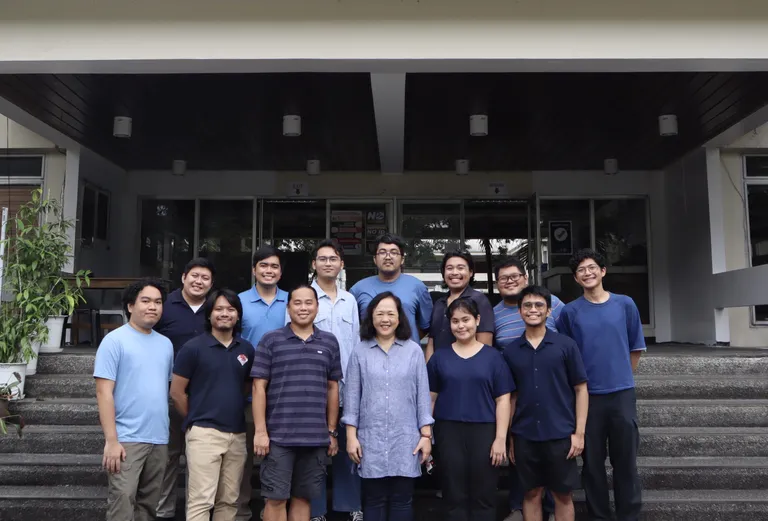
Meet the researchers, students and staff of the Nannoworks Laboratory.
Read more