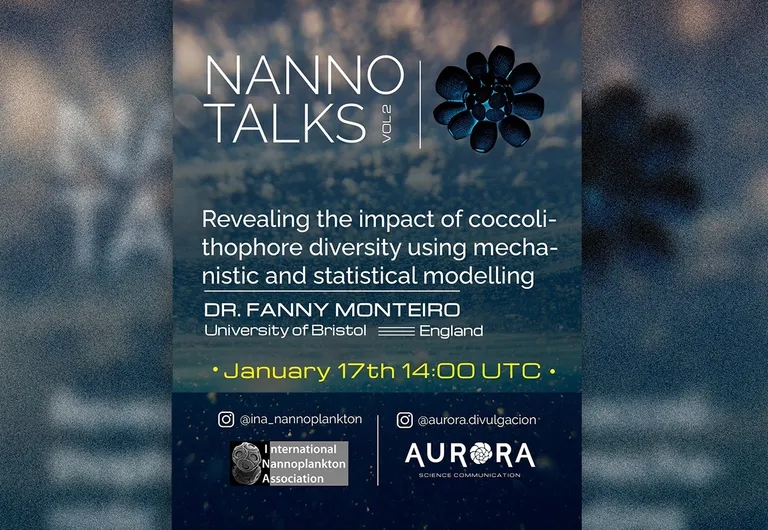
We are inviting our colleagues and fellow fossil enthusiasts to attend the second series of Nannotalks by the International Nannoplankton Association (INA). The first talk in the second series will be delivered by Dr. Fanny Monteiro of the University of Bristol, UK, with a title “Revealing the impact of coccolithophore diversity using mechanistic and statistical modelling.” The meeting is set to be held on the 17th of January, 2022 (14:00 UTC; 22:00 PhilST). The abstract is posted below:
While most coccolithophore studies rely on the fast-growing Emiliania huxleyi species, observations suggest that other species are more important for the ocean calcium carbonate production as larger and more heavily calcified. Including diversity is then fundamental to understanding coccolithophore's ecological and climatic impact. Here, I present the development of two modelling techniques, mechanistic and statistical, to explore the impact of coccolithophore diversity on the global ocean. The mechanistic model relies on the promising trait-based approaches, where biodiversity is captured by functional diversity, which defines functional groups of similar traits (e.g., size, calcification) and trade-offs (costs and benefits of a particular trait). We apply trait-based approaches to coccolithophore and review the costs and benefits of coccolithophore main trait of calcification. We find that calcification has multiple benefits explaining their high diversity and broad ecological niches. We also find that trait-based knowledge is limited to modelling coccolithophore functional diversity accurately. Without more knowledge, an alternative approach is to use statistical modelling, where we model coccolithophore species distributions combining global datasets of coccolithophore abundance of the top 160 species and environmental conditions (e.g., temperature, nutrients, light). The resulting coccolithophore species distribution model shows that while E. huxleyi is the most abundant species, it counts for ~1/3of the total organic carbon biomass, with species like Umbellosphaera tenuis and U. irregularis also dominant.
More details can be found on the INA Facebook page.
More from the lab
- ThesisThesisMore Thesis →
Thesis Proposal: Jyll Radbert Botardo
The thesis proposal defense of Mr. Jyll Radbert P. Botardo was held on May 8, 2026 at 11:30AM. His proposal defense was part of the NIGS Thesis Proposal Colloquium for the 2nd Semester, AY 2025-2026. Mr. Jyll Radbert P. Botardo, a former University Research Associate I at the UP National Institute of Geological Sciences, presented…
 FieldworksMore Fieldworks →
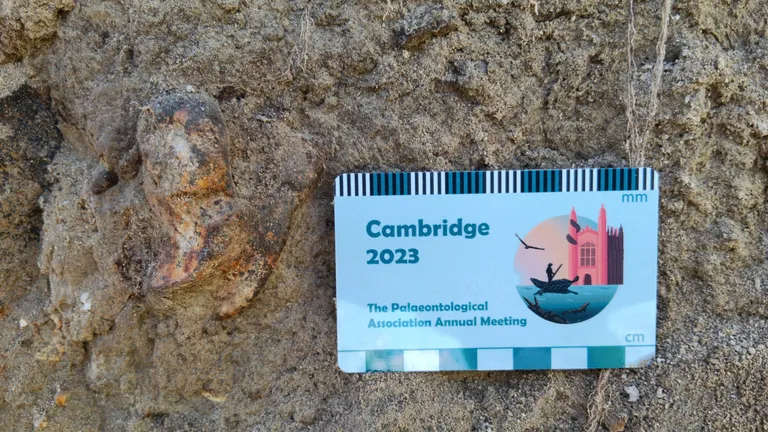
Nannoworks Conducts Paleontological Fieldwork in Bacnotan, La Union
Members of the Nannoworks Laboratory conducted paleontological fieldwork in the municipality of Bacnotan in La Union Province last July 6-13, 2026.
 NannoTalksMore NannoTalks →
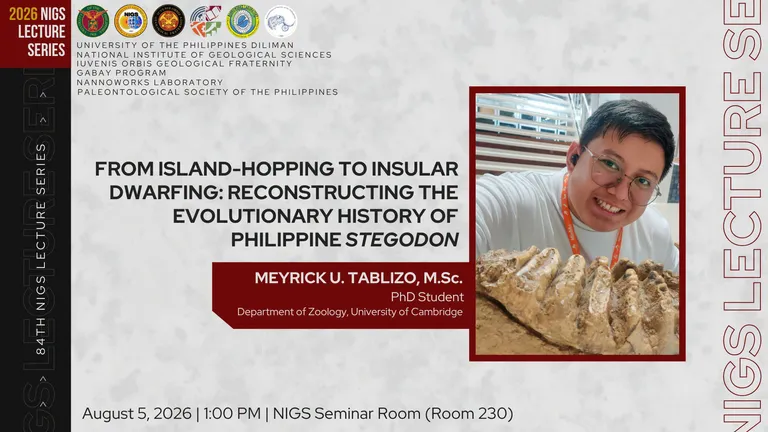
NIGS Lecture Series August 5, 2026: Meyrick U. Tablizo
The Nannoworks Laboratory invited its alumnus Mr. Meyrick U. Tablizo last August 5, 2026 to deliver a talk on his research "From Island-Hopping to Insular Dwarfing: Reconstructing the Evolutionary History of Philippine Stegodon."
 NannoChatsMore NannoChats →
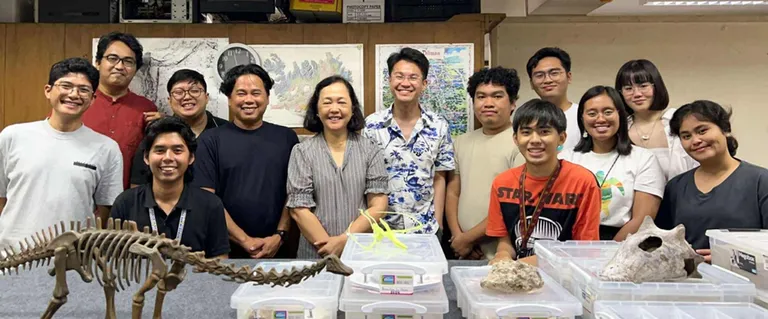
Dr. Jose Dominick Guballa chats about "nannos" during Nannochats
Nannoworks alumni and University of Toronto postdoctoral fellow, Dr. Jose Dominick Guballa returned to Room 014 for a Nannochats presentation on his research chapters on “Coccolithophore assemblage composition during the Greenland Interstadial–Stadial 20 transition and their response to the Youngest Toba Tuff (YTT) supereruption ∼74,000 years ago in the northeastern Arabian Sea”. The Toba
 NewsMore News →
Nannoworks Class of 2026
With the passing of another academic year, the Nannoworks Laboratory proudly congratulates the BS and MS graduates of the laboratory for AY 2025-2026!