Members of the Nannoworks Laboratory conducted a series of fieldwork sessions focusing on fossil mollusc-bearing units across various localities. A team of lab members, along with visiting paleontologist Dr. Tomoki Kase, conducted fieldwork in La Union from April 21-27, Masungi Georeserve on May 2-3, and Bulacan on May 7, 2024.
The Phylum Mollusca is well-represented in the fossil record. Numerous sedimentary units in the Philippines contain the remains of these organisms, awaiting study. From April 21-27, the team comprising of Dr. Fernando, Dr. Kase, David Policarpio, and John Paul Mondala, studied several formations in Santo Domingo, Lao-ingen, Magsingal, and Damortis in La Union. Based on the mollusc assemblage of the Pliocene formation in Lao-ingen (The mollusc genera of Trisidos, Dolomena, Oliva, and a lot of reefal large benthic foraminifera), the paleoenvironment was initially interpreted to be a lagoonal environment. The team then focused on collecting the most complete and intact fossil specimens using rock picks, brushes, scribers, and specimen adhesives.
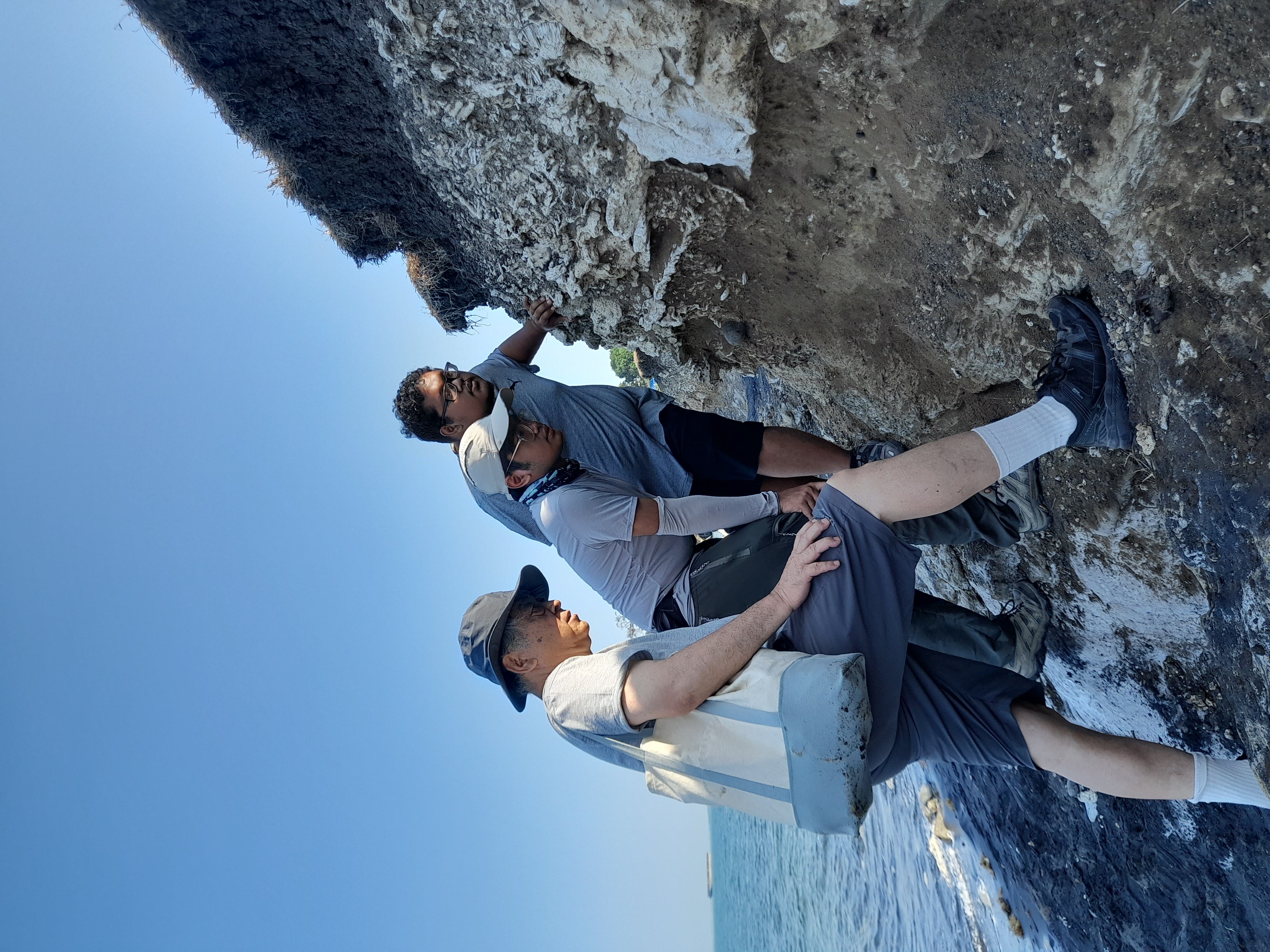
(L-R) Dr. Tomoki Kase, JP Mondala and David Policarpio examining the outcrop in Damortis, La Union.
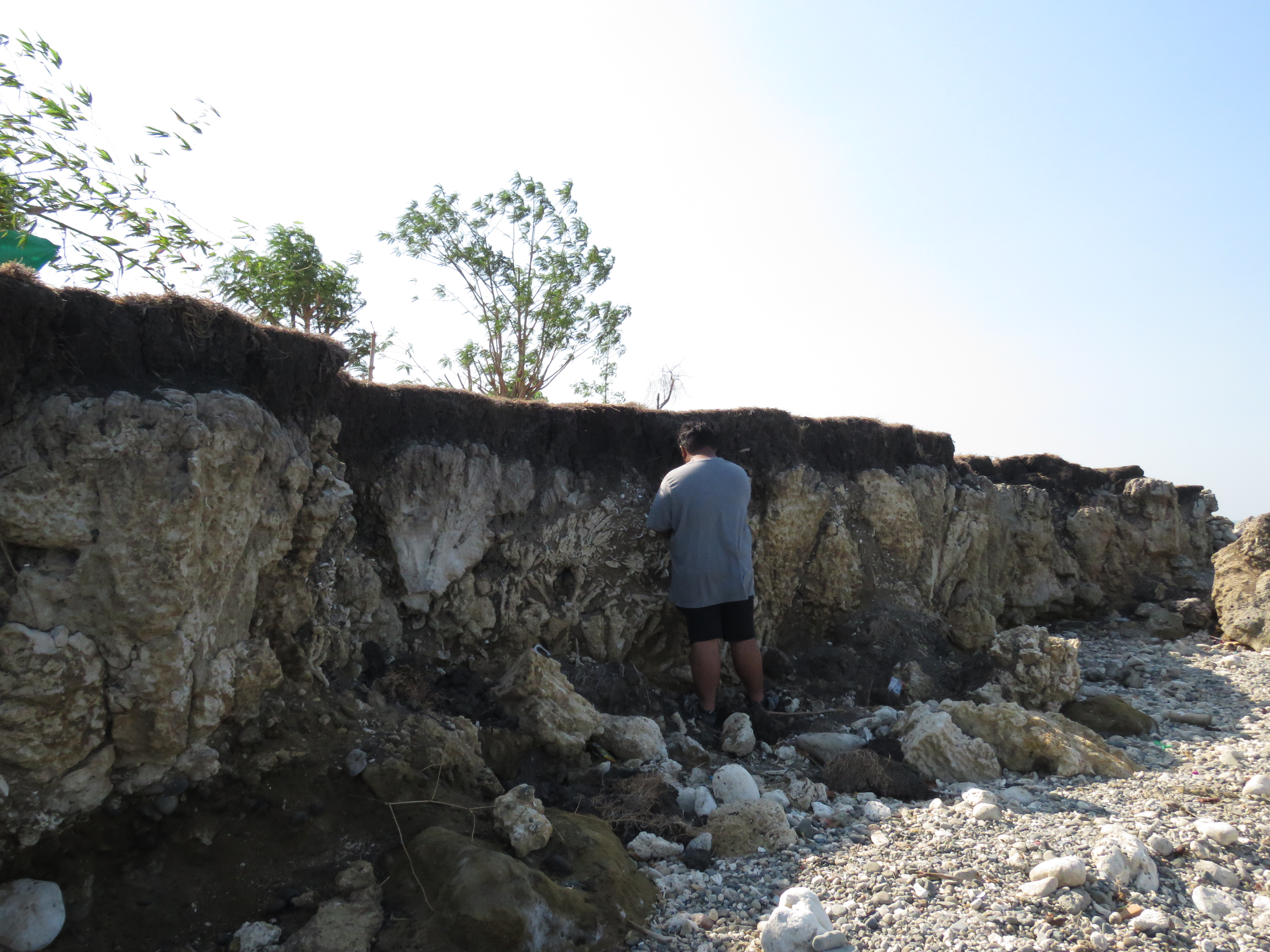
The outcrop in Damortis, La Union consists of an uplifted lagoonal platform composed predominantly of coral rubble and mollusk fragments.
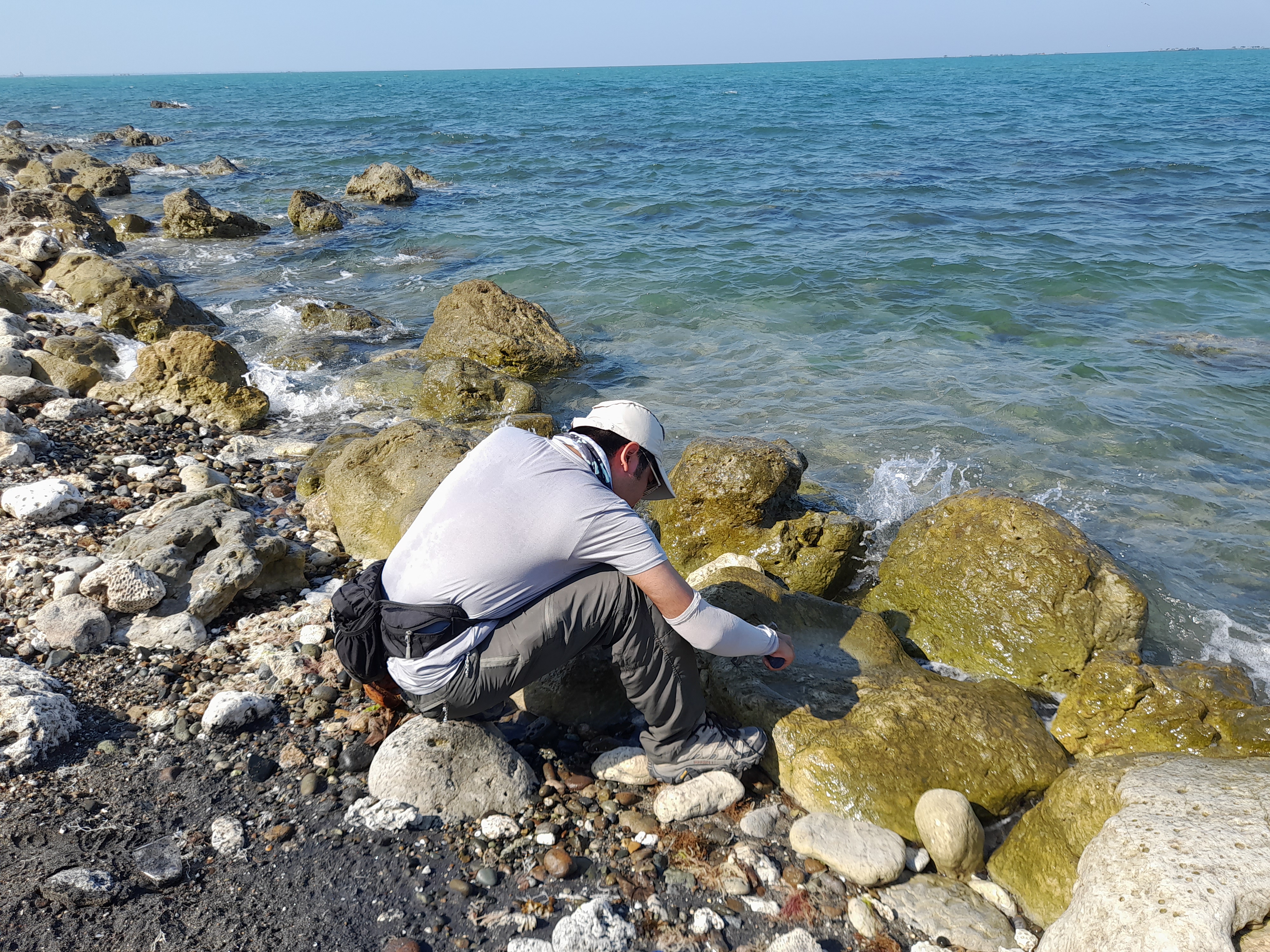
JP Mondala examining coral boulders on the shoreline adjacent to the Damortis outcrop.
After studying the Pliocene clastic rocks of La Union, the team moved to the Eocene karstic limestone of the Masungi Georeserve in Baras, Rizal, on May 2-3. At this leg of the fieldwork series, the team was joined by Joaquin Lacson and paleontologist Dr. Yolanda Aguilar. The name “Masungi” is derived from the word sungki-sungki, referring to the area’s jagged karstic terrain. At specific localities along the trail, gastropod and bivalve fossils were observed and sampled for laboratory analysis. Numerous Nummulites-bearing areas were also noted. The presence of marine foraminifera and mollusc fossils in the Georeserve indicates that the area was once of marine affinity, now juxtaposed in a terrestrial environment but still rich in malacofaunal diversity, albeit now with extant land snails.
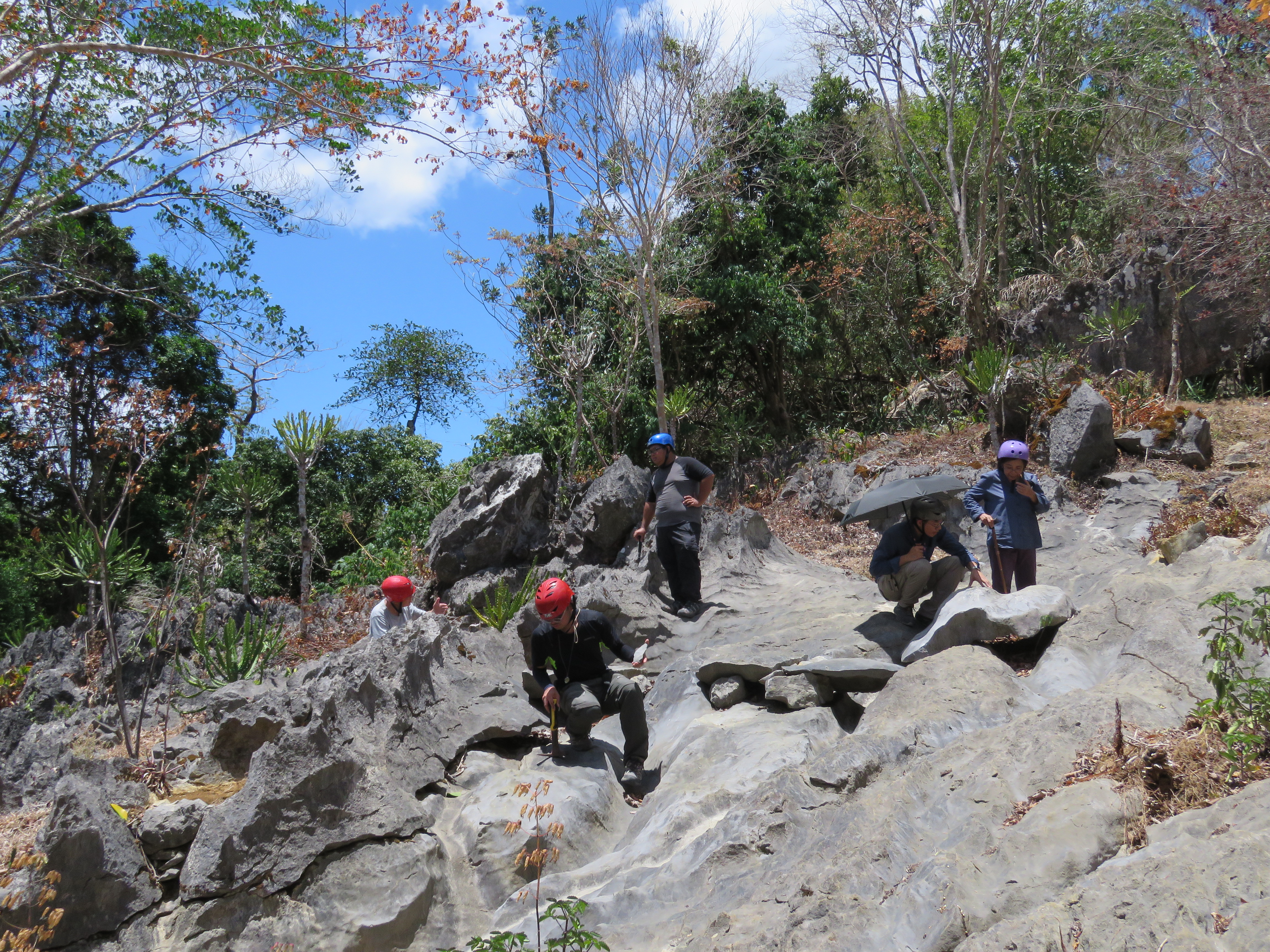
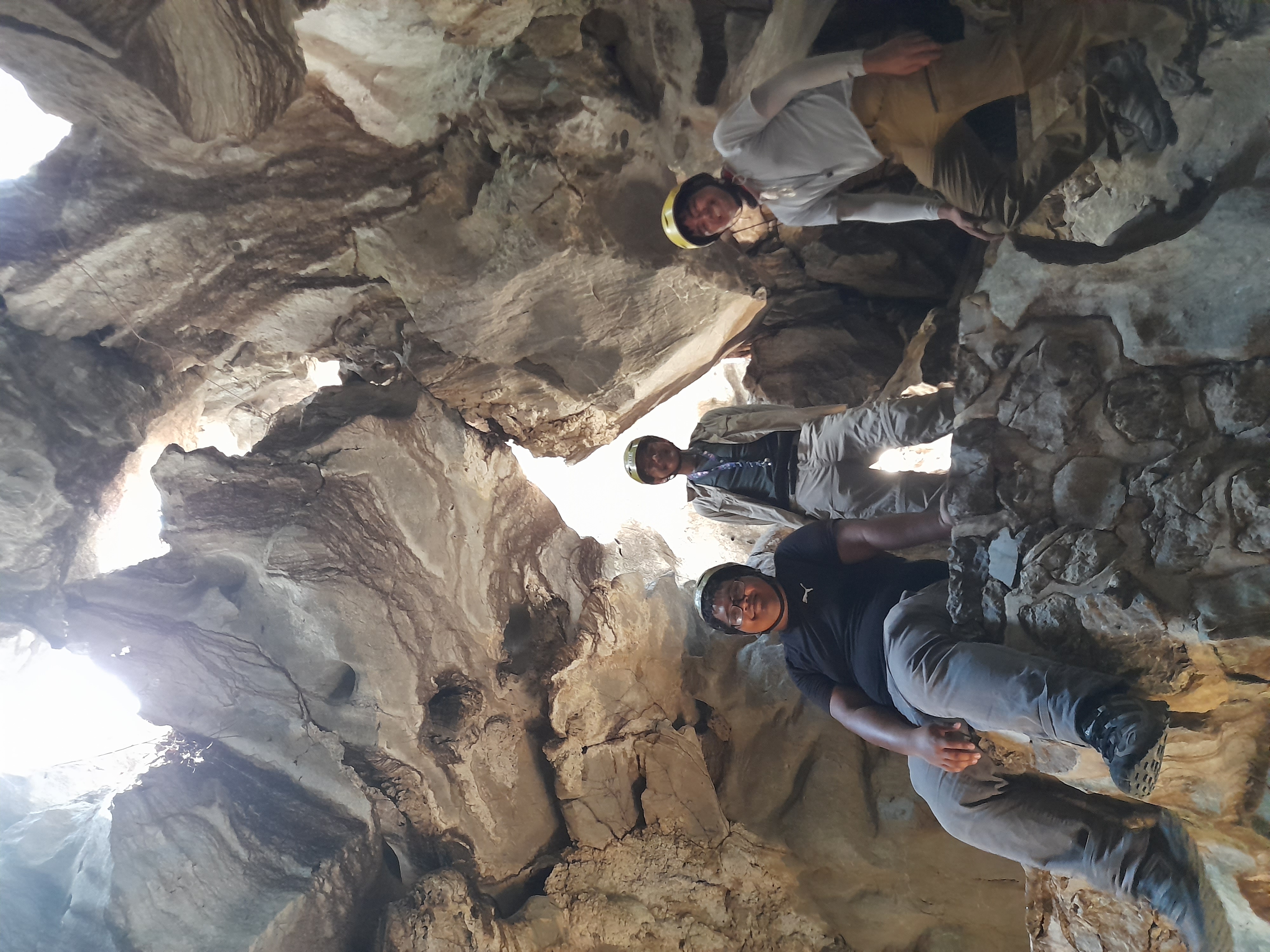
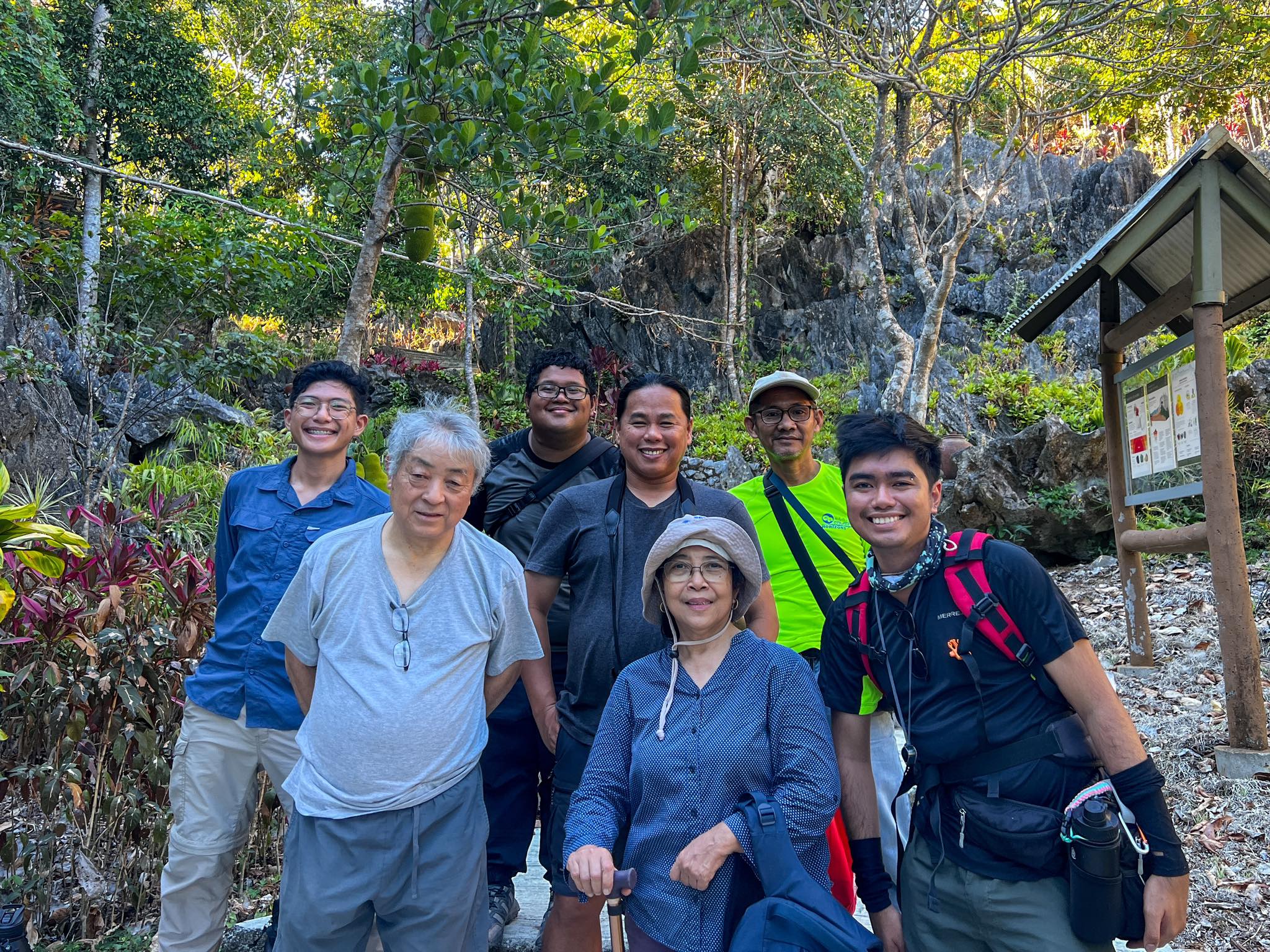
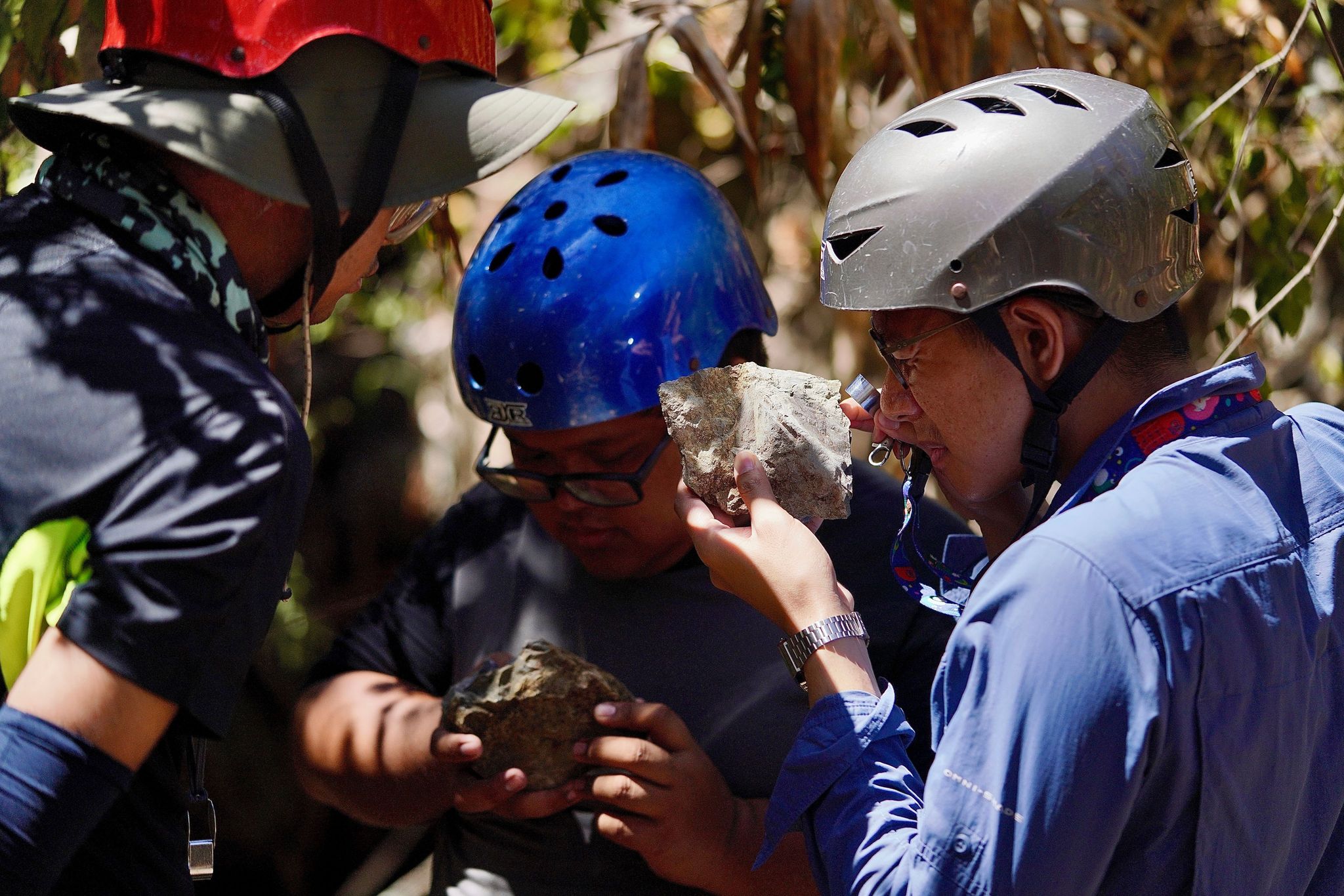
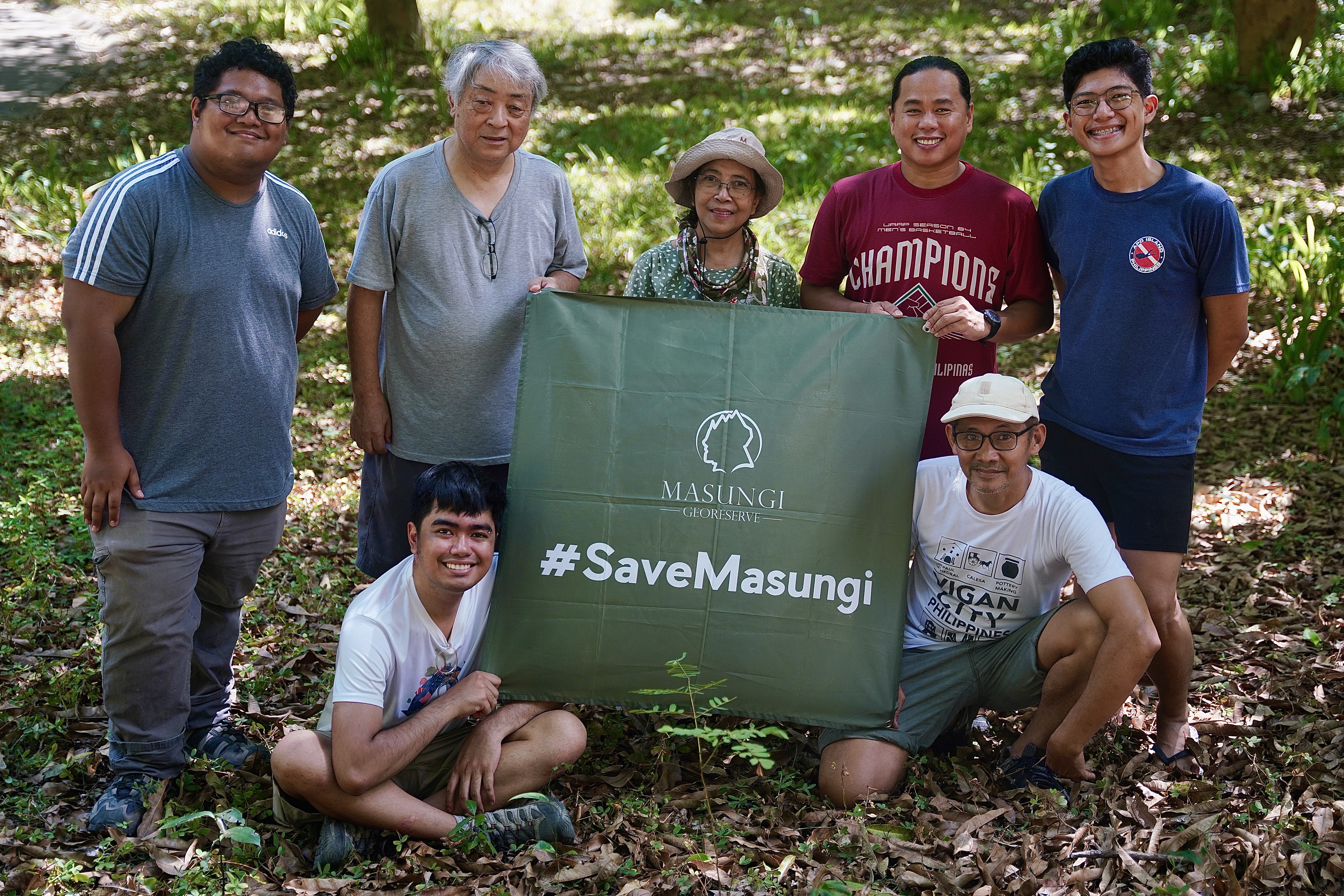
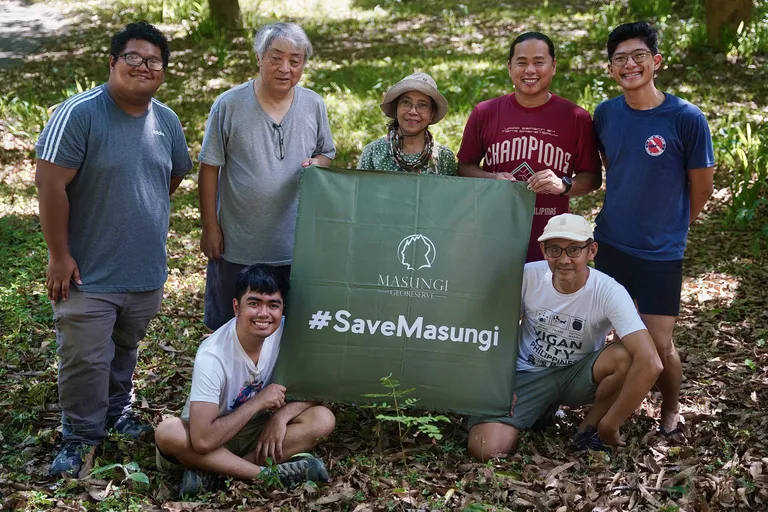
The Masungi Fossil Team consisting of (L-R, back) David Policarpio, Dr. Tomoki Kase, Dr. Yolanda Aguilar, Dr. Allan Fernando, Joaquin Lacson, (L-R, front) JP Mondala and Joval Esponilla, posing with the Masungi Georeserve #SaveMasungi initiative.
The last leg of the fieldwork series is in the Tartaro Formation of San Miguel, Bulacan. The team was joined by Dominique Mediodia, John Phillip Baguio, and Antero II Borja. They were successful in obtaining more mollusc fossils and sediment samples for laboratory analysis. Otoliths (fish ear bones) were also obtained from the sediments and will be subjected to species identification.
The series of fieldworks highlights the opportune paleontological studies in the Philippines, especially the potential for molluscan paleontology.
Write-up by John Paul Mondala, University Research Associate
More from the lab
- ThesisThesisMore Thesis →
Thesis Proposal: Jyll Radbert Botardo
The thesis proposal defense of Mr. Jyll Radbert P. Botardo was held on May 8, 2026 at 11:30AM. His proposal defense was part of the NIGS Thesis Proposal Colloquium for the 2nd Semester, AY 2025-2026. Mr. Jyll Radbert P. Botardo, a former University Research Associate I at the UP National Institute of Geological Sciences, presented…
 FieldworksMore Fieldworks →
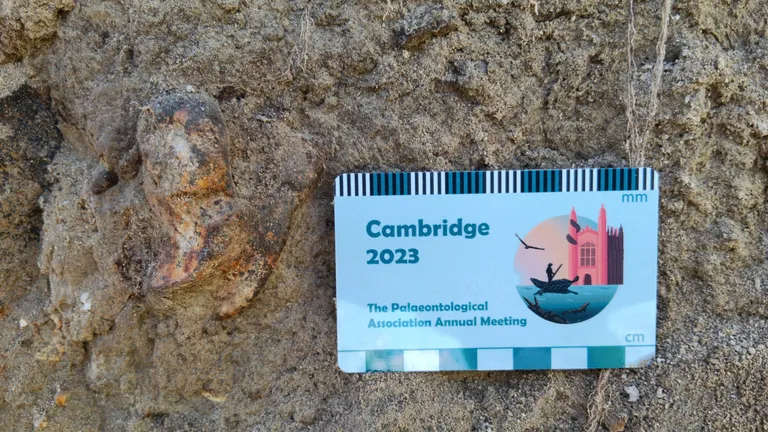
Nannoworks Conducts Paleontological Fieldwork in Bacnotan, La Union
Members of the Nannoworks Laboratory conducted paleontological fieldwork in the municipality of Bacnotan in La Union Province last July 6-13, 2026.
 NannoTalksMore NannoTalks →
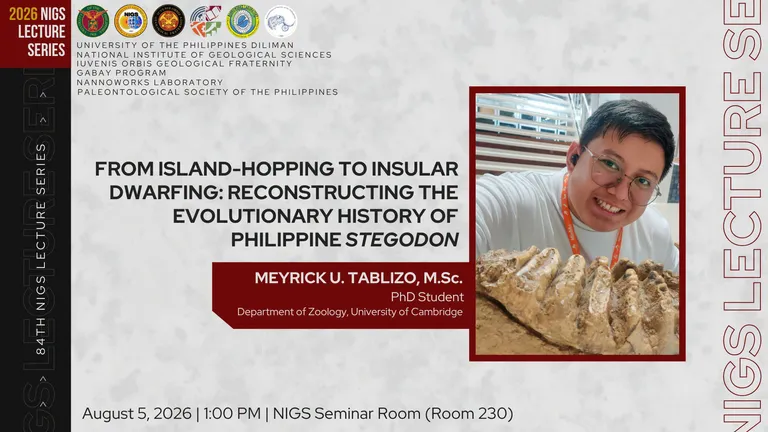
NIGS Lecture Series August 5, 2026: Meyrick U. Tablizo
The Nannoworks Laboratory invited its alumnus Mr. Meyrick U. Tablizo last August 5, 2026 to deliver a talk on his research "From Island-Hopping to Insular Dwarfing: Reconstructing the Evolutionary History of Philippine Stegodon."
 NannoChatsMore NannoChats →
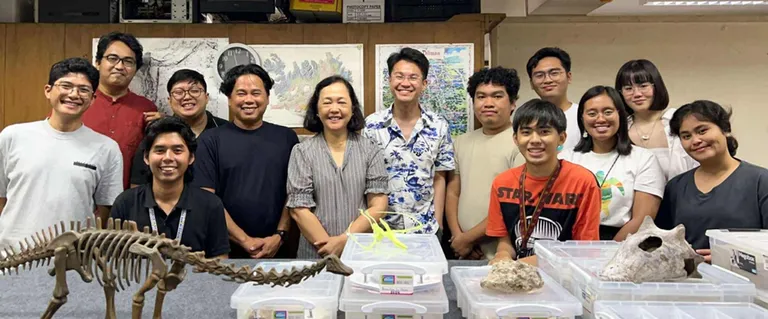
Dr. Jose Dominick Guballa chats about "nannos" during Nannochats
Nannoworks alumni and University of Toronto postdoctoral fellow, Dr. Jose Dominick Guballa returned to Room 014 for a Nannochats presentation on his research chapters on “Coccolithophore assemblage composition during the Greenland Interstadial–Stadial 20 transition and their response to the Youngest Toba Tuff (YTT) supereruption ∼74,000 years ago in the northeastern Arabian Sea”. The Toba
 NewsMore News →
Nannoworks Class of 2026
With the passing of another academic year, the Nannoworks Laboratory proudly congratulates the BS and MS graduates of the laboratory for AY 2025-2026!