The thesis defense of Mrs. Maria Gracia Collantes-Padrique was held in-person on July 3, 2024, 2:00PM at the NIGS Seminar Room. Her research is entitled “Constraining the Porosity of Geothermal Reservoir Rocks Using Petrography, Image Segmentation, and Machine Learning Classifiers” with thesis committee composing of Dr. Allan Gil S. Fernando (adviser), Dr. Maricor N. Soriano (UP-NIP, co-adviser), Mrs. Sylvia G. Ramos, M.Sc. (Premier Geo-Excel, Inc., reader), Dr. Noelynna T. Ramos (examiner) and Dr. John Dale B. Dianala (examiner).
ABSTRACT
A qualitative assessment of geothermal reservoir rock samples involves a detailed petrographic analysis. This includes visually estimating pore and vein fractions, identifying rock textures, describing the degree of alteration, identifying the hydrothermal alteration and indicated temperature, and noting the presence of shearing and various porosity types. This traditional method of visual estimation and assessment are prone to errors when averaging fields-of-view and can be labor-intensive, especially during time-sensitive drilling operations when a geologist must analyze hundreds of thin sections per well under a polarizing petrographic microscope. Porosity is a crucial parameter for calculating the recoverable steam fraction from a geothermal system. To enhance the traditional visual assessment method, this thesis explores the use of machine learning classifiers combined with detailed petrography to constrain the porosity of reservoir rocks from an active geothermal field in the Philippines. To constrain the porosity means to evaluate how certain rock features correlate to the different levels of porosity of the six lithologies obtained from the study area. The study employed machine learning for: (1) segmentation of 104 high-resolution scanned thin section images; (2) porosity classification of the scanned thin section images using input parameters obtained from segmentation and petrography; (3) application of convolutional neural networks (CNN) for porosity classification of over 4,000 photomicrographs and (4) development of CNN models for detecting epidote, a key mineral marker for production in Philippine geothermal fields. The models' accuracies were evaluated using various metrics, including ANOVA Feature Importance Analysis, ROC curve, confusion matrix, F-score, precision, and recall. This study identified key features contributing to the porosity classification which are alteration intensity and vein formation; developed a high-precision model for detecting epidote in photomicrographs with near perfect to perfect true positive rate scores; and proposed a recommended workflow for geothermal petrology.
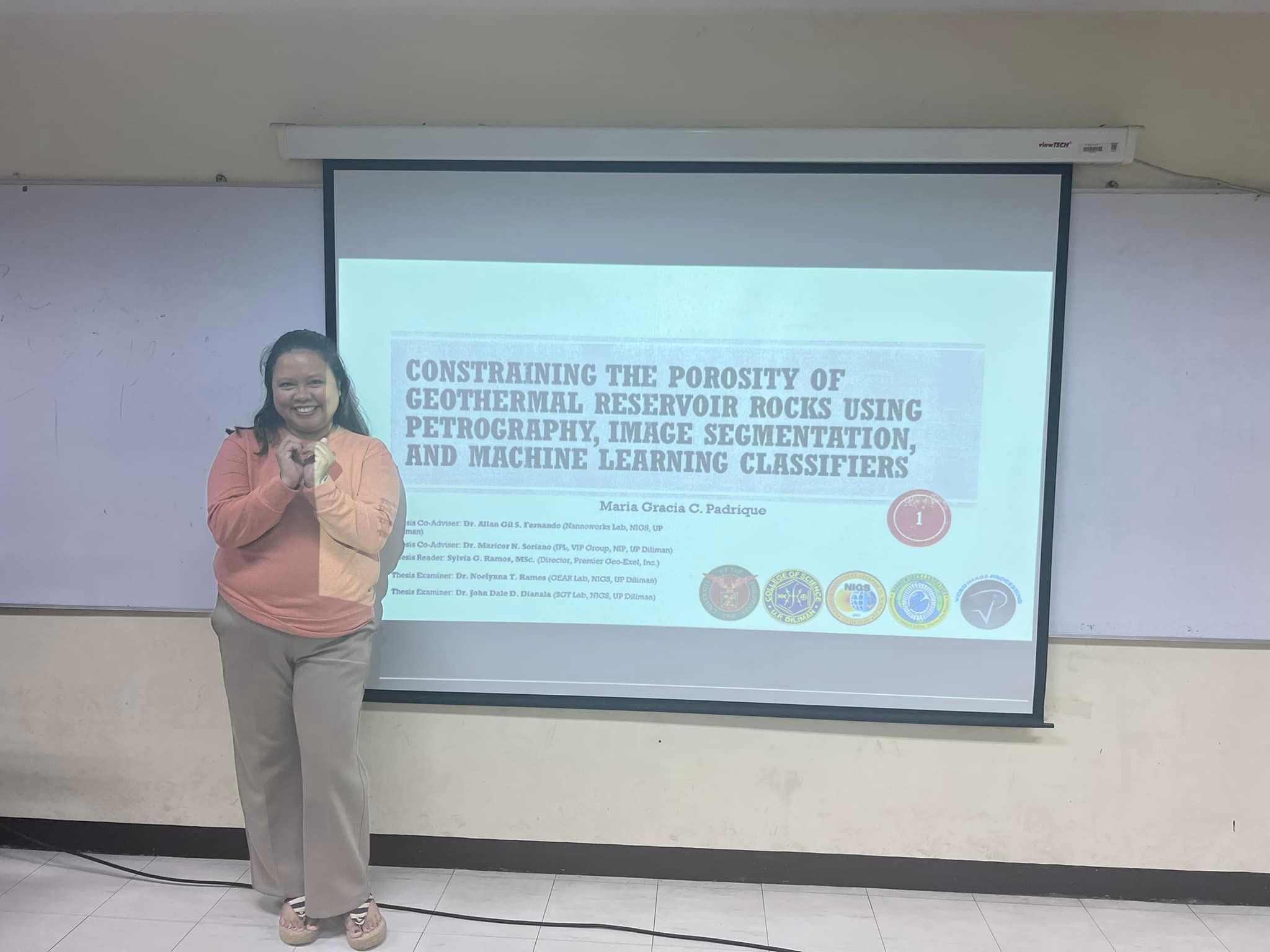
Mrs. Padrique in front of her title slide after her thesis defense. Photo by Yhen Arcangel.
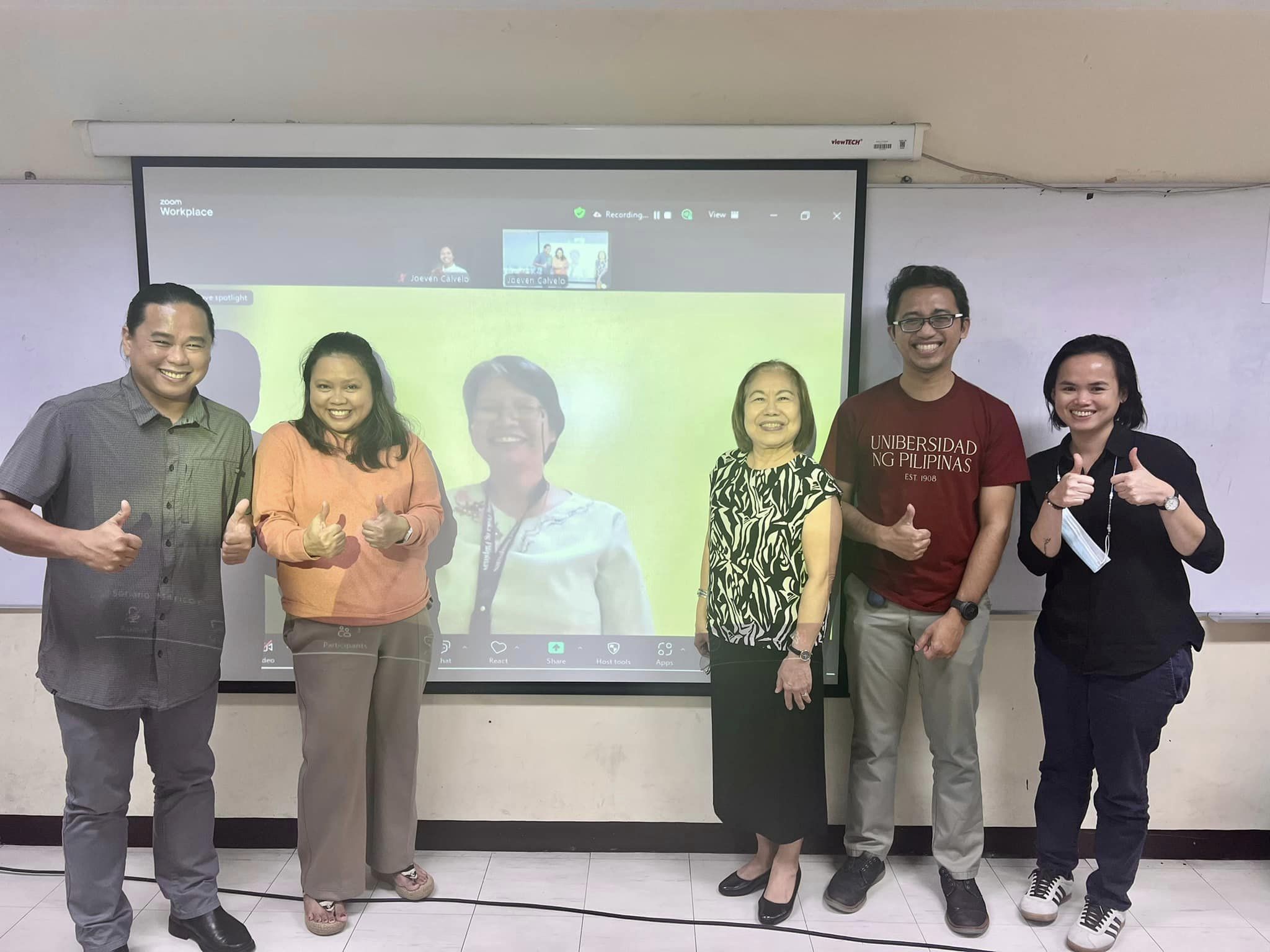
Mrs. Padrique together with her thesis committee and administrators from UP NIGS. Photo by Yhen Arcangel.
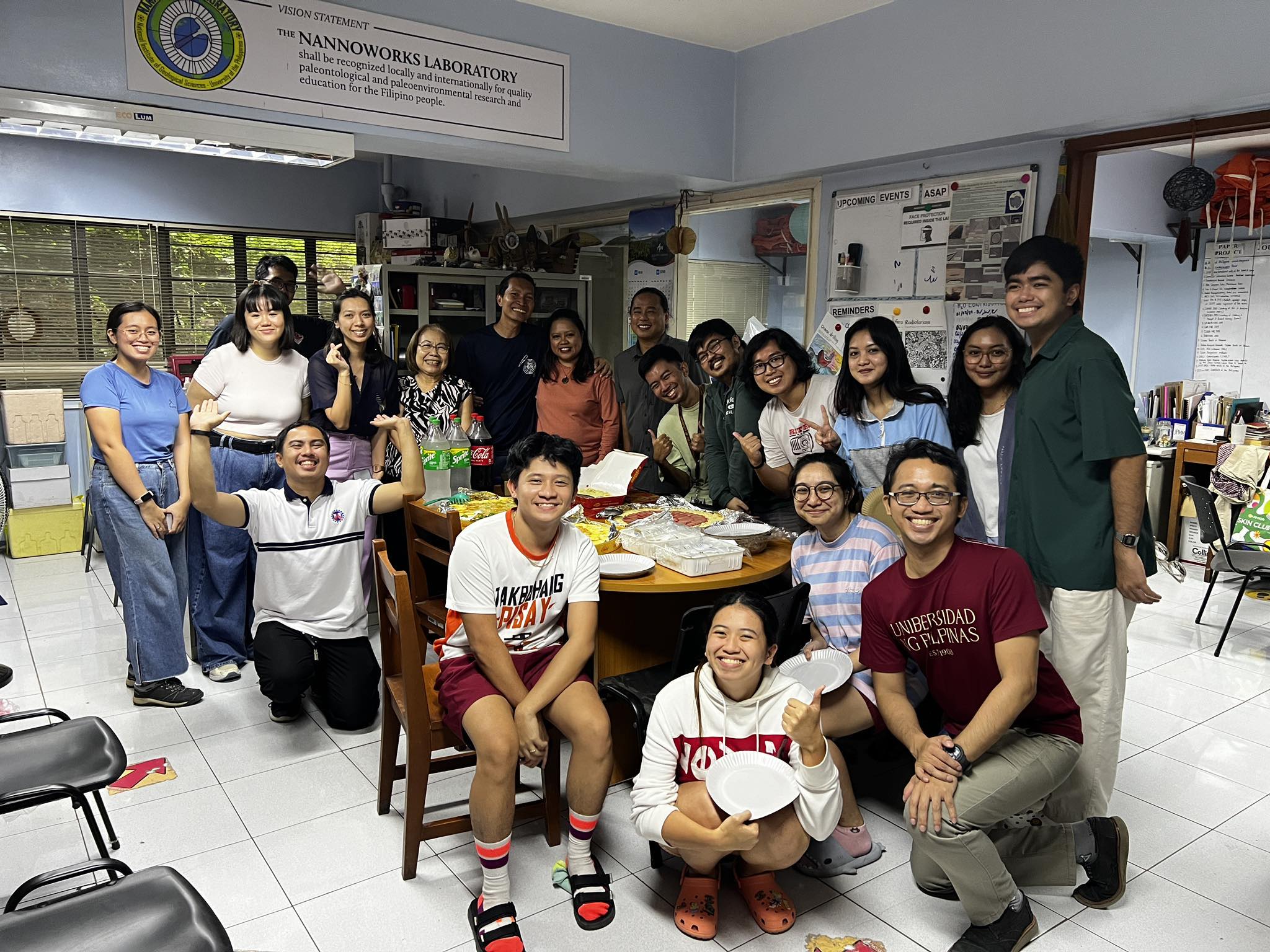
Group photo of members of the Nannoworks Laboratory with Mrs. Padrique and her thesis committee after her defense. Photo by Joeven Calvelo.
More from the lab
- ThesisThesisMore Thesis →
Thesis Proposal: Jyll Radbert Botardo
The thesis proposal defense of Mr. Jyll Radbert P. Botardo was held on May 8, 2026 at 11:30AM. His proposal defense was part of the NIGS Thesis Proposal Colloquium for the 2nd Semester, AY 2025-2026. Mr. Jyll Radbert P. Botardo, a former University Research Associate I at the UP National Institute of Geological Sciences, presented…
 FieldworksMore Fieldworks →
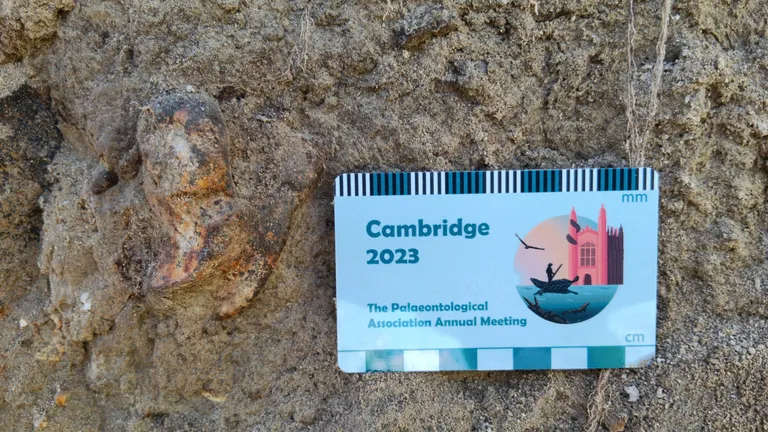
Nannoworks Conducts Paleontological Fieldwork in Bacnotan, La Union
Members of the Nannoworks Laboratory conducted paleontological fieldwork in the municipality of Bacnotan in La Union Province last July 6-13, 2026.
 NannoTalksMore NannoTalks →
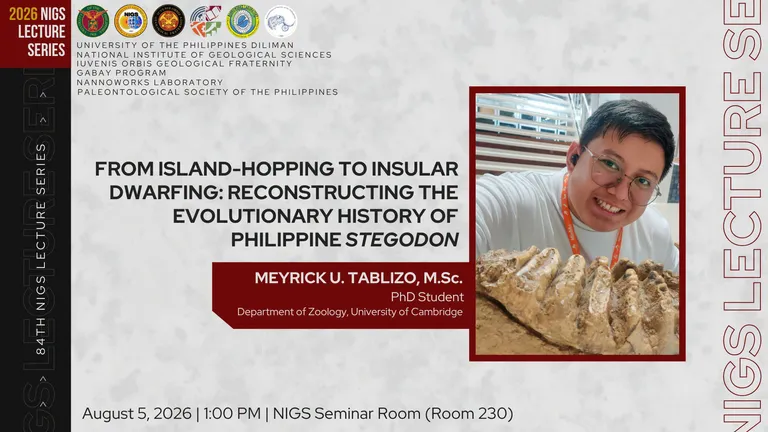
NIGS Lecture Series August 5, 2026: Meyrick U. Tablizo
The Nannoworks Laboratory invited its alumnus Mr. Meyrick U. Tablizo last August 5, 2026 to deliver a talk on his research "From Island-Hopping to Insular Dwarfing: Reconstructing the Evolutionary History of Philippine Stegodon."
 NannoChatsMore NannoChats →
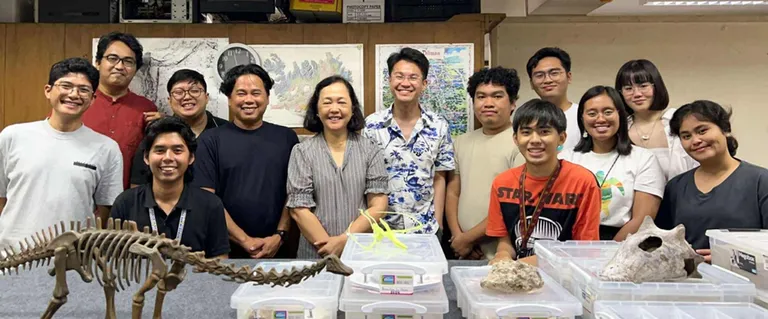
Dr. Jose Dominick Guballa chats about "nannos" during Nannochats
Nannoworks alumni and University of Toronto postdoctoral fellow, Dr. Jose Dominick Guballa returned to Room 014 for a Nannochats presentation on his research chapters on “Coccolithophore assemblage composition during the Greenland Interstadial–Stadial 20 transition and their response to the Youngest Toba Tuff (YTT) supereruption ∼74,000 years ago in the northeastern Arabian Sea”. The Toba
 NewsMore News →
Nannoworks Class of 2026
With the passing of another academic year, the Nannoworks Laboratory proudly congratulates the BS and MS graduates of the laboratory for AY 2025-2026!